Sleep · 4 min read
Music at bedtime: a simple wind-down routine
How to use calm music as the last step of your evening: what to choose, how loud, how long, and a small routine for the last hour of the day.
Read enough books about sleep and one idea keeps coming back, under every technique and every rule: the body sleeps when it feels safe. A slow rhythm, a warm room and a familiar sound are old signals that nothing needs watching tonight. Calm music is one of the simplest of them. Ours starts from a slow binaural frequency, with Singing Bowls and other instruments on top.
Studies of music at bedtime suggest that it can help people feel that they sleep better. It is not a treatment for insomnia, and it works best as one part of a calm evening. This is how to make it part of yours.
Choose the right kind of sound
- No words. Language keeps the thinking mind busy. Choose music without singing or speaking.
- No surprises. Sudden changes in volume or rhythm pull you back up. Slow, even music lets you sink.
- The same piece every night. After a week your body starts to recognise it. The first notes become a signal that the day is over.
- Long enough. Thirty minutes covers the time most people need to fall asleep. If you wake often, a piece of several hours gives you something to return to.
 7 Chakra Descent into Deep SleepA short taste on YouTube; long versions are on the channel ↗
The last hour, step by step
- 60 minutes before bed: lower the lightsBright days and dim evenings set the body clock. Switch off the ceiling light and use one lamp.
- 45 minutes: something warm, nothing heavyA herbal tea is fine. Keep caffeine for the morning and alcohol away from bedtime; both make sleep lighter.
- 30 minutes: put the day on paperWrite down what is still on your mind and the first thing you will do about it tomorrow. A written list no longer needs to be rehearsed in bed.
- 15 minutes: screens awaySet the alarm, start the music, turn the phone face down. From here on, nothing new comes in.
- In bed: ten slow breathsRest one hand on your belly and let your breath slow to the music. You are not trying to fall asleep. You are only practising being still, and letting sleep find you there.
How loud, and for how long
Quieter than you think: just above the silence of the room. If the sound leaves when you are almost asleep and that wakes you, let it play all night at a very low level instead of using a timer. If you prefer silence once you are asleep, a timer of 45 to 60 minutes is enough for most people.
When you lie awake anyway
Everyone has such nights. The sleep books agree on what helps least: looking at the clock and trying harder. If you have been awake for what feels like twenty minutes, get up, sit somewhere dim, and do something quiet until you feel sleepy again. The music can come with you.
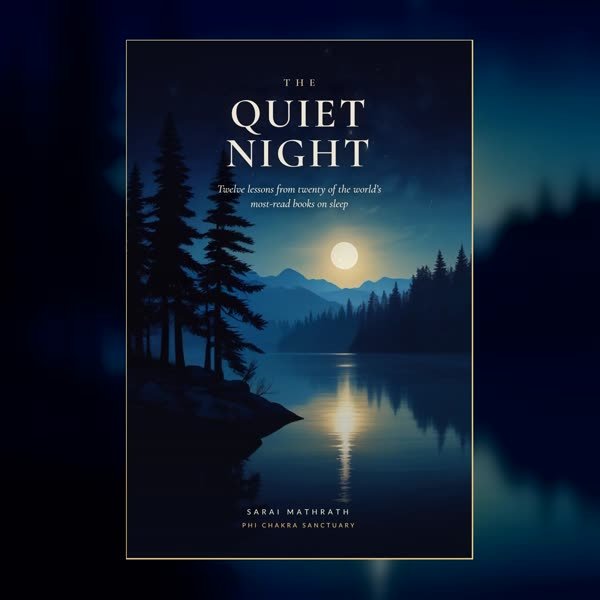
The Quiet Night
Twelve lessons from twenty of the most-read books on sleep, each with three small things to try tonight, plus a seven-night reset and a sleep diary.
Get the ebookThree of the books this routine draws on, all practical and kind in tone.
- Say Good Night to Insomnia (Gregg Jacobs) ↗
- Quiet Your Mind and Get to Sleep (Carney & Manber) ↗
- The Sleep Book (Guy Meadows) ↗
Some links on this page go to Amazon. As an Amazon Associate we earn from qualifying purchases, at no extra cost to you.
Rather just press play?
Stream the music from our shop without adverts, on any device, with a sleep timer. We are building it now.
A new sound journey every evening
Subscribe on YouTube and your evening routine never runs out. No talking, no sudden sounds.
Subscribe on YouTube ↗