Sleep gear · 4 min read
How to choose sleep headphones
Headband, earbuds or a pillow speaker: what to look for in headphones you can fall asleep with, and when a speaker is the better choice.
A large share of the people who listen to our music do so in bed. The most common question that follows is a practical one: what do I wear on my ears so I can fall asleep, stay comfortable and not wake my partner? Here is what matters, in order.
First: do you need headphones at all?
If you sleep alone and the music has no binaural beat, a small speaker on the bedside table at low volume is the most comfortable choice there is. Nothing touches your head, and nothing can run out of battery in your ear.
You need headphones in two cases: when someone next to you wants silence, and when the music uses a binaural beat. A binaural beat appears only when the left and right ear each get their own tone, which a speaker cannot do. In our tracks the binaural frequency is the core and the instruments come on top, which is why headphones matter for them.
The three kinds
- Headband headphonesA soft fabric band with flat speakers inside. This is what most side sleepers end up with: nothing sticks into the ear and nothing presses when your head is on the pillow. Sound quality is modest, which matters little for slow music at low volume.
- Small sleep earbudsTiny buds made to sit flush in the ear. They block more noise from outside, which helps with a snoring partner or a loud street. Not everyone tolerates something in the ear all night, and they are easy to lose in the bed.
- Pillow speakersA flat speaker that slides under or into the pillow. Nothing on your head at all, and your partner hears very little. There is no left and right, so binaural beats will not work.
What to check before you buy
- Thickness of the speakers. For side sleeping, thinner is better. Look for flat speakers and read what side sleepers say in the reviews.
- Washable band. You will wear it for hours every night. The speakers should come out so the band can be washed.
- Battery life. Eight hours or more if you play music all night; less is fine if you use a sleep timer.
- No lights, no voice. Some models blink or announce “battery low” loudly at 4 a.m. Reviews will tell you.
- Wired or Bluetooth. Bluetooth is easier in bed. A wired set never needs charging and has no radio, if that matters to you.
- Warmth. Fleece bands are cosy in winter and too warm in summer. Thin, breathable fabric works all year.
These searches are a good starting point. They open Amazon with current models, so you can compare reviews yourself.
Some links on this page go to Amazon. As an Amazon Associate we earn from qualifying purchases, at no extra cost to you.
Volume and safety
Keep the volume lower than feels necessary. Music for sleep should sit just above the silence of the room, so that you could still hear someone speak to you. Hours of sound at high volume are tiring for the ears, and a quiet level is more restful anyway. If you need to hear a child, an alarm or a doorbell, leave one ear free or use a speaker.
Take the music offline
The other thing that wakes people is not the headphones but an advert that plays in the middle of the night, or a phone that lights up. Downloaded music solves both: put the phone on flight mode, turn the screen face down, and let the file play.
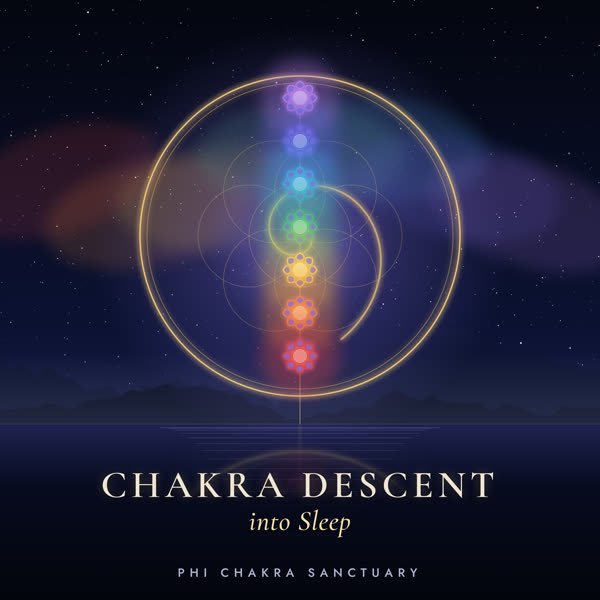
Chakra Descent into Sleep
Seven chapters that move down from the crown to the root, made for the hour in which you fall asleep.
Download the album 3-Hour 639 Hz Heart Chakra Sleep MusicTry a long sleep piece on YouTube first ↗
Rather just press play?
Stream the music from our shop without adverts, on any device, with a sleep timer. We are building it now.
A new sound journey every evening
Subscribe on YouTube and your evening routine never runs out. No talking, no sudden sounds.
Subscribe on YouTube ↗